At a glance
Real Shark Tank pitches in this guide
Swipe →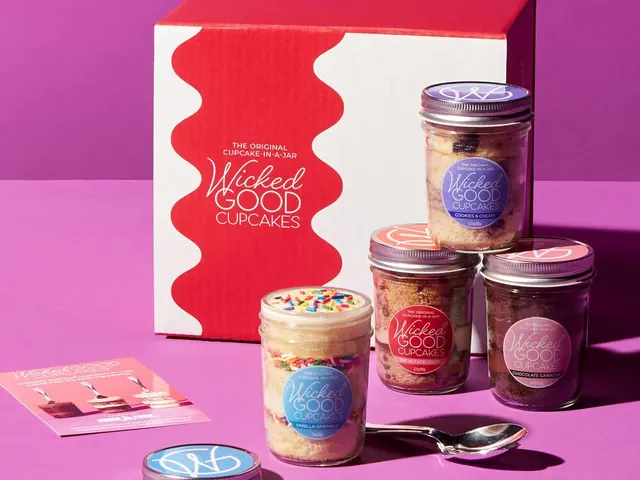 Deal
Wicked Good Cupcakes
Season 4 · Kevin O'Leary
Deal
Zipz
Season 6 · Kevin O'Leary
 Deal
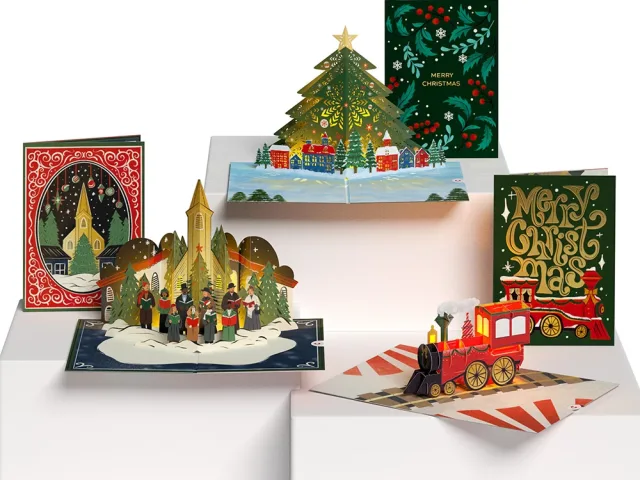
Lovepop
Season 7 · Kevin O'Leary
Deal
Talbott Teas
Season 3 · Kevin O'Leary
Deal
Simply Fit Board
Season 7 · Lori Greiner
Deal
The Measuring Shovel
Season 11 · Lori Greiner
 Deal
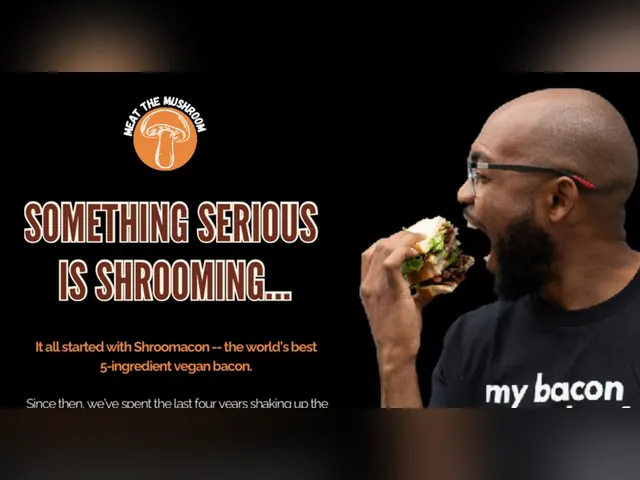
Meat the Mushroom
Season 15 · Lori Greiner
Deal
Bottle Breacher
Season 6 · Mark Cuban
Royalty deals are one of the most distinctive features of Shark Tank negotiations. Instead of (or in addition to) taking ownership in a company, an investor receives a payment every time a unit sells. To founders, a royalty can look attractive because it keeps more equity in their hands. To investors, it can be a faster way to get cash back. Both views can be right, which is why it's worth understanding the mechanics before you ever hear the word "royalty" in a negotiation.
This guide explains common deal concepts for education only. It is not financial or legal advice; have a qualified advisor review any real agreement.
What is a royalty deal?
A royalty is an ongoing payment tied to sales. On Shark Tank it usually takes one of two forms:
- Per-unit royalty: a fixed dollar amount per item sold, such as $1 per unit.
- Percentage royalty: a percentage of revenue, such as 5% of sales.
The royalty is often paired with a limit. Common structures include a royalty that lasts until the investor recoups their money, one that drops to a lower rate after recoupment, or one that continues indefinitely. The royalty may be combined with a smaller equity stake.
Why Kevin O'Leary is associated with royalties
Kevin O'Leary is widely known for proposing royalty structures on the show, often framing them as a way to get his capital back quickly while letting the founder keep more ownership. He has been part of 145 on-air deals in our database, 81 of them as the only Shark in the deal. Not every one of those involved a royalty, and our database records which Sharks invested, not the specific terms, so always watch the episode for details.
Businesses that closed deals with Kevin O'Leary include Wicked Good Cupcakes (Season 4), cupcakes baked in mason jars for shipping; Zipz (Season 6), single-serve wine in recyclable stemmed glasses; Lovepop (Season 7), 3D pop-up greeting cards; and Talbott Teas (Season 3), which our records list as acquired. He has also partnered with other Sharks, for example with Lori Greiner on Simply Fit Board (Season 7), The Measuring Shovel (Season 11) and Meat the Mushroom (Season 15), and with Mark Cuban on Bottle Breacher (Season 6).
Other Sharks use royalties too, and guest Sharks have proposed them as well. See which Shark to pitch for each investor's general style.
How the math works: three worked examples
Example 1: Per-unit royalty until recoup
A Shark invests $100,000 for 10% equity plus a $1 royalty per unit until the $100,000 is repaid.
- If the company sells 50,000 units a year, the royalty pays $50,000 a year.
- The investor recoups $100,000 in 2 years.
- After that, the investor still owns 10% of the company.
Example 2: Royalty that steps down
Same $100,000, but the royalty is $2 per unit until $200,000 is paid, then $0.50 per unit forever.
- At 50,000 units a year, the first phase pays $100,000 a year and ends after 2 years.
- After that, $0.50 per unit means $25,000 a year, indefinitely.
- Over 10 years, the investor would receive roughly $200,000 + (8 × $25,000) = $400,000, before any equity value.
Example 3: Percentage royalty and margin impact
Imagine a product with a $20 wholesale price and an $8 landed cost: a $12 gross profit per unit (60% gross margin).
| Royalty | Royalty per unit | Gross profit left | Share of gross profit paid |
|---|---|---|---|
| $0.50 per unit | $0.50 | $11.50 | 4% |
| $1 per unit | $1.00 | $11.00 | 8% |
| 5% of revenue | $1.00 | $11.00 | 8% |
| $3 per unit | $3.00 | $9.00 | 25% |
The key insight: a royalty comes off the top, before overhead. A business with thin margins can feel a modest royalty very sharply, because the payment is due even in months when the company isn't profitable.
A full scenario: comparing two offers
Suppose a founder asks for $120,000 for 10% (a $1.2 million valuation). The product wholesales for $15, costs $6 to land, and the company expects to sell 40,000 units next year and 60,000 the year after. Two hypothetical offers come in:
- Offer A: $120,000 for 30% equity, no royalty.
- Offer B: $120,000 for 10% equity plus $1.50 per unit until $240,000 is paid, then $0.50 per unit ongoing.
Under Offer B, year one royalties are 40,000 × $1.50 = $60,000. Year two is 60,000 × $1.50 = $90,000. By the end of year two, $150,000 has been paid, and the $240,000 threshold would be reached partway through year three if growth continues. After that, $0.50 per unit continues indefinitely.
Under Offer A, the founder pays nothing per unit but gives up an extra 20% of the company forever. If the business is eventually worth $5 million, that extra 20% represents $1 million of value.
Which offer is better depends on how fast the company grows, how much cash it needs to reinvest, and whether the founder expects a large exit. The point is that the comparison is impossible without writing down volumes and margins. Founders who do this homework before a negotiation can evaluate a royalty in seconds instead of guessing under pressure.
Pros and cons for founders
| Potential advantages | Potential drawbacks |
|---|---|
| Founder may keep more equity | Reduces gross margin on every sale |
| Investor's payback is clear and measurable | Payments are due regardless of profit |
| Can bridge a valuation gap | Perpetual royalties never end |
| Ends or steps down after recoup (if structured that way) | Can complicate future fundraising or an acquisition |
| Aligns investor with sales growth | May reduce cash available to grow |
When a royalty might make sense
- High-margin products where a per-unit payment is a small share of gross profit.
- Predictable sales volume, so you can model when the investor will be repaid.
- A valuation gap where the founder wants to keep equity and the investor wants faster payback.
- Clear end points: a cap, a step-down or a sunset date.
When to be cautious
- Thin margins or rising costs.
- A royalty with no cap or end date.
- A business that plans to raise venture capital later; some future investors may view ongoing royalties negatively.
- Royalties on revenue rather than units when you plan to raise prices (the payment rises with price).
Questions to ask before accepting
- Is the royalty per unit or a percentage of revenue, and on which channels?
- Does it end, step down or continue forever?
- Is it calculated on gross sales or net sales after returns and discounts?
- How does it interact with any equity the investor also receives?
- What happens if the company is sold?
- Can the company buy out the royalty early?
Royalty vs. licensing
A royalty deal is different from a licensing deal, though both involve per-unit payments. In licensing, the inventor typically lets another company make and sell the product and receives royalties from that company. In a Shark Tank royalty deal, the founder keeps running the business and pays the investor. For the strategic trade-offs, read Licensing vs. Building a Brand.
The bottom line
A royalty isn't inherently good or bad. It's a tool for pricing risk. Model it against your real margins and volumes, insist on clear end points, and compare it to an equity-only offer using the valuation calculator and our valuation guide. Many terms in our deal terms glossary come up alongside royalties, so it's worth a read before any negotiation.
Again, nothing here is financial or legal advice; every agreement is different.
Frequently asked questions
How does a royalty deal work on Shark Tank?
The investor provides cash and receives a payment on each unit sold or a percentage of revenue, often until they recoup their investment and sometimes beyond. It may be combined with an equity stake.
Why does Kevin O'Leary like royalty deals?
He is widely known for proposing royalties as a way to get his capital back faster while letting founders keep more equity. Terms vary by deal, so watch each episode for specifics.
Are royalty deals bad for entrepreneurs?
Not necessarily. They can work for high-margin products with predictable sales, but they reduce margin on every sale and payments are due regardless of profit, so caps and end dates matter.
What is the difference between a royalty and licensing?
In a Shark Tank royalty deal, the founder runs the business and pays the investor per sale. In licensing, another company makes and sells the product and pays the inventor a royalty.
Every pitch, deal and Shark mentioned here is checked against our database of 1,533 Shark Tank pitches. Cost ranges are typical estimates, not quotes. This is general education, not financial, legal or investment advice. Editorial policy · Suggest a correction
Keep learning
See all →

Negotiation Lessons From the Tank
Shark Tank compresses a negotiation that normally takes weeks into minutes.
How to Value Your Startup Before You Ask for Money
Before you ask anyone for money, you need a defensible valuation. This guide walks through four…
Shark Tank Deal Terms Glossary
A plain-English glossary of the deal terms you hear on Shark Tank, from equity and valuation to…

How Valuation Works on Shark Tank (With Examples)
Every Shark Tank ask contains a valuation: divide the dollars by the equity percentage.

The Questions Sharks Always Ask (and How to Answer Them)
Almost every Shark Tank pitch is decided in the question-and-answer round, not the opening speech.
Common Shark Tank Pitch Mistakes That Kill Deals
About four in ten Shark Tank pitches in our database ended without a deal on air.
How to Start a Franchise Business: Lessons From 9 Shark Tank Pitches
Franchising lets a proven concept grow with other people's capital and effort, but it only works…

How to Start a Smart Home Gadget Business: Lessons From 12 Shark Tank Pitches
Smart home devices promise convenience, safety and savings, but hardware is hard.
How to Start a Snack Brand: Lessons From 10 Shark Tank Pitches
Snacks are one of the most crowded aisles in the grocery store and one of the most frequently…