At a glance
- 💰 Startup cost
- $40K-$500K+
- 📈 Difficulty
- Hard
- ⏱️ Time to launch
- 6-18 months
- 📊 Typical margins
- Low-Medium per unit (roughly 10-20% operating, typical estimate)
- 🎯 Best for
- Operators who like systems and training, or owners of a profitable local business that could run without them
Real Shark Tank pitches in this space
Swipe → Deal
Tippi Toes
Season 2 · Barbara Corcoran
Deal
Wine & Design
Season 8 · Kevin O'Leary
 Deal
Press Waffle Co.
Season 10 · Barbara Corcoran
Deal
Fat Shack
Season 10 · Mark Cuban
 Deal
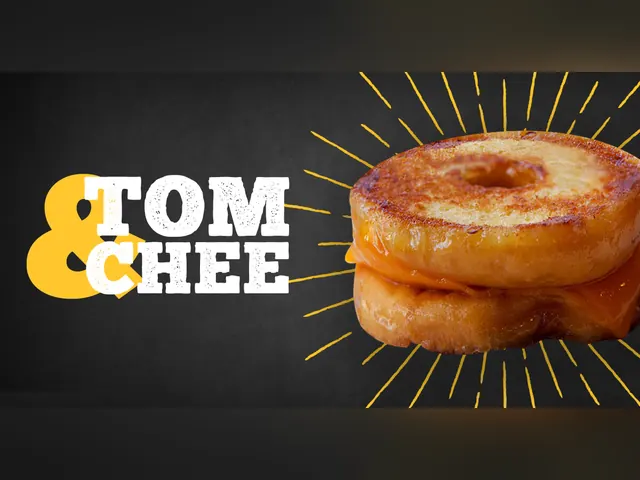
Tom + Chee
Season 4 · Barbara Corcoran
 Deal
Cinnaholic
Season 5 · Robert Herjavec
 No deal
Romp n' Roll
Season 1
No deal
Games2U
Season 2
 No deal
Nuchas
Season 10
Why a franchise business works now
A franchise business can mean two very different things. You can buy into an existing system as a franchisee, paying fees in exchange for a brand, a playbook and support. Or you can turn your own successful business into a franchise system, selling other owners the right to copy it. Both paths appeal to people who want a business with a track record instead of an untested idea.
For franchisees, the attraction is a proven model: site selection guidance, suppliers, training and marketing are already worked out. For founders, franchising is a way to expand into many markets without raising all the capital for every location yourself. The catch on both sides is the same. Franchising multiplies whatever is already there. A location that barely breaks even does not become profitable because there are fifty of them, and weak systems create unhappy owners, disputes and closures.
What Shark Tank pitches teach us
Franchise concepts appear regularly on Shark Tank, mostly from founders who already run a few locations and want help scaling. Barbara Corcoran in particular has backed several.
- Tippi Toes (Season 2), a dance program and franchise for young children often held at preschools and daycares, got a deal with Barbara Corcoran and Mark Cuban and is listed as active. Lesson: a low-overhead model that uses other people's space can be easier to replicate than one that needs a full storefront.
- Wine & Design (Season 8), a franchise of art studios hosting painting classes with wine, got a deal with Kevin O'Leary. Lesson: an experience people book for groups and celebrations can travel from city to city.
- Press Waffle Co. (Season 10), a Liège waffle restaurant franchise, got a deal with Barbara Corcoran, and late-night comfort food franchise Fat Shack (Season 10) got a deal with Mark Cuban. Lesson: a simple menu with a clear target customer, such as college towns for Fat Shack, is easier to teach and replicate.
- Restaurant chains Tom + Chee (Season 4, grilled cheese and tomato soup) and Cinnaholic (Season 5, vegan cinnamon rolls) got deals with Barbara Corcoran and Mark Cuban, and Robert Herjavec, respectively. Both are listed as active. A narrow, memorable concept is a recurring theme.
- Not every franchise pitch closed. Romp n' Roll (Season 1, children's enrichment centers) and Games2U (Season 2, mobile video game theater trucks for parties) left without deals but are listed as active in our database. Nuchas (Season 10), an empanada brand with franchise locations and food trucks, also left without a deal.
The pattern: the Sharks look past the brand to the numbers at a single location and to how many units the founder has already opened. A franchise pitch is really a pitch about repeatable unit economics.
Startup costs breakdown
These are typical estimates. Costs vary enormously by industry, from a home-based service franchise to a full restaurant build-out.
| Item | Buying a franchise unit | Franchising your own concept |
|---|---|---|
| Initial franchise fee | $20,000-$50,000 | Not applicable |
| Build-out, equipment or vehicle | $20,000-$400,000+ | Already in place at your existing unit |
| Opening inventory and supplies | $5,000-$30,000 | Not applicable |
| Franchise attorney (FDD review or drafting) | $2,000-$5,000 | $15,000-$50,000 |
| Operations manual and training program | Included in fees | $5,000-$25,000 |
| Audited financial statements and state registrations | Not applicable | $10,000-$40,000 |
| Franchise sales marketing | Not applicable | $10,000-$50,000 |
| Working capital for the first months | $10,000-$75,000 | $10,000-$40,000 |
Ongoing royalties (often 4-8% of sales) and marketing fund contributions (often 1-4%) also apply to franchisees, as typical ranges.
Step-by-step: how to start
- Decide which side you are on. Buying a unit suits someone who wants a proven playbook. Franchising your own concept suits an owner whose business is profitable, documented and not dependent on the founder's personal skill.
- Understand the FTC Franchise Rule. In the US, the Federal Trade Commission's Franchise Rule requires franchisors to give prospective buyers a Franchise Disclosure Document (FDD) at least 14 days before they sign or pay. The FDD covers fees, litigation history, estimated initial investment, franchisee obligations, and audited financials. Some states also require franchisors to register or file before selling there.
- If buying, read the FDD closely. Look at the Item 7 initial investment estimate, Item 19 financial performance representations if provided, Item 20 unit openings and closures, and Item 21 financial statements. Call current and former franchisees listed in the document.
- If franchising, prove the model first. Run at least one, ideally several, profitable locations, and track unit-level revenue, labor, rent and food or supply costs.
- Document everything. Write the operations manual, training program, supplier list, brand standards and opening checklist. If it lives only in your head, it cannot be franchised.
- Protect the brand. Register your trademark before selling territories. Franchisees are paying for the right to use it.
- Hire a franchise attorney. Use someone who specializes in franchising to draft or review the FDD and franchise agreement and to handle state registrations.
- Sell slowly and choose carefully. Early franchisees shape your reputation. A few strong operators beat many weak ones.
How to make money
Franchisees earn from the profit of their location after royalties, rent, labor and supplies. Franchisors earn from initial fees, ongoing royalties and sometimes supply markups or technology fees.
- Franchisee: income depends on unit sales and costs. Many owners take several years to recover their initial investment, so plan conservatively.
- Franchisor royalties: recurring and high-margin, but they only become meaningful once many units are open and selling well.
- Franchise fees: often absorbed by recruiting, training and opening support, so they rarely produce much profit on their own.
- Company-owned units: many franchisors keep some locations to test new products and generate cash.
The healthiest systems make money when franchisees make money, not from selling as many territories as possible.
Questions the Sharks would ask you
- What does one location earn in sales and profit, and how long does it take to pay back the build-out?
- How many units are open, and how many have closed?
- Do your franchisees make money, and would they buy another unit?
- What happens to the business if you step away for a month?
- How much do you collect per unit in royalties and fees each year?
- How do you choose franchisees and territories?
Red flags that sink pitches in this category
- Franchising too early: selling territories before one location has been profitable for a sustained period.
- Founder-dependent success: a concept that works because of one charismatic owner or chef.
- Weak unit economics: high rent, labor or food costs that leave little after royalties.
- Thin support: no real training, manual or field support for new owners.
- Compliance gaps: selling without a proper FDD or required state registrations.
- Revenue from fees, not operations: a franchisor that depends on new franchise sales to stay afloat.
Whether you buy a unit or build a system, the same rule applies: get one location working beautifully, write down exactly how, and only then multiply it.
Frequently asked questions
How much does it cost to start a franchise?
As a typical estimate, buying a franchise unit ranges from about $50,000 for home-based or mobile service concepts to $500,000 or more for restaurants with full build-outs. Franchising your own existing business commonly costs $40,000-$150,000 for legal work, the FDD, audits, manuals and franchise sales marketing.
What is a Franchise Disclosure Document (FDD)?
The FDD is a disclosure document that the FTC Franchise Rule requires franchisors to give prospective franchisees at least 14 days before signing or paying. It covers fees, initial investment estimates, obligations, litigation, unit openings and closures, and audited financial statements. Some states have additional registration requirements.
When is a business ready to franchise?
Generally when at least one location has been consistently profitable, the operations are documented well enough that someone else could run it, the brand is trademarked, and the profit per unit can support royalties while still giving franchisees a good return.
Are franchises less risky than independent businesses?
They can reduce some risks by providing a tested model, suppliers and training, but they add others: ongoing fees, contract restrictions and dependence on the franchisor. Results vary widely by system, so review the FDD carefully and talk with current and former franchisees.
Every pitch, deal and Shark mentioned here is checked against our database of 1,533 Shark Tank pitches. Cost ranges are typical estimates, not quotes. This is general education, not financial, legal or investment advice. Editorial policy · Suggest a correction
More business ideas
See all →


How to Start a Home Services Business: Lessons From 8 Shark Tank Pitches
Junk removal, moving, cleaning and lawn care are steady, local businesses you can start with…




How to Start a Wedding Business: Lessons From 12 Shark Tank Pitches
Couples spend heavily on one day, and event hosts need help with everything from photos to…



How to Start a Bedding and Sleep Products Business: Lessons From 11 Shark Tank Pitches
Better sleep is something nearly everyone wants, which makes bedding and sleep products a large…



How to Start an Athleisure & Activewear Brand: Lessons From 10 Shark Tank Pitches
Activewear is huge, but the brands that break through focus on a specific body, sport or problem.


How to Start a Fitness Equipment Business: Lessons From 12 Shark Tank Pitches
Home workouts have created lasting demand for compact, clever equipment.



How to Start a Sneaker & Footwear Brand: Lessons From 12 Shark Tank Pitches
Footwear is one of the hardest fashion categories to launch, with high minimums and endless sizes…




Licensing vs. Building a Brand: Lessons From Shark Tank
Inventors on Shark Tank face a fundamental choice: license the idea to a company that already has…


A Shark-Tank-Style Elevator Pitch Template (Fill in the Blank)
A practical, fill-in-the-blank template for a Shark Tank-style pitch, with 30-second, one-minute…




What "No Deal" Success Stories Teach Founders
Leaving the Tank without a deal is not the end of the story. In our database, no-deal businesses…